Sunday, April 12, 2020

Bayadera group

Family Euphaeidae

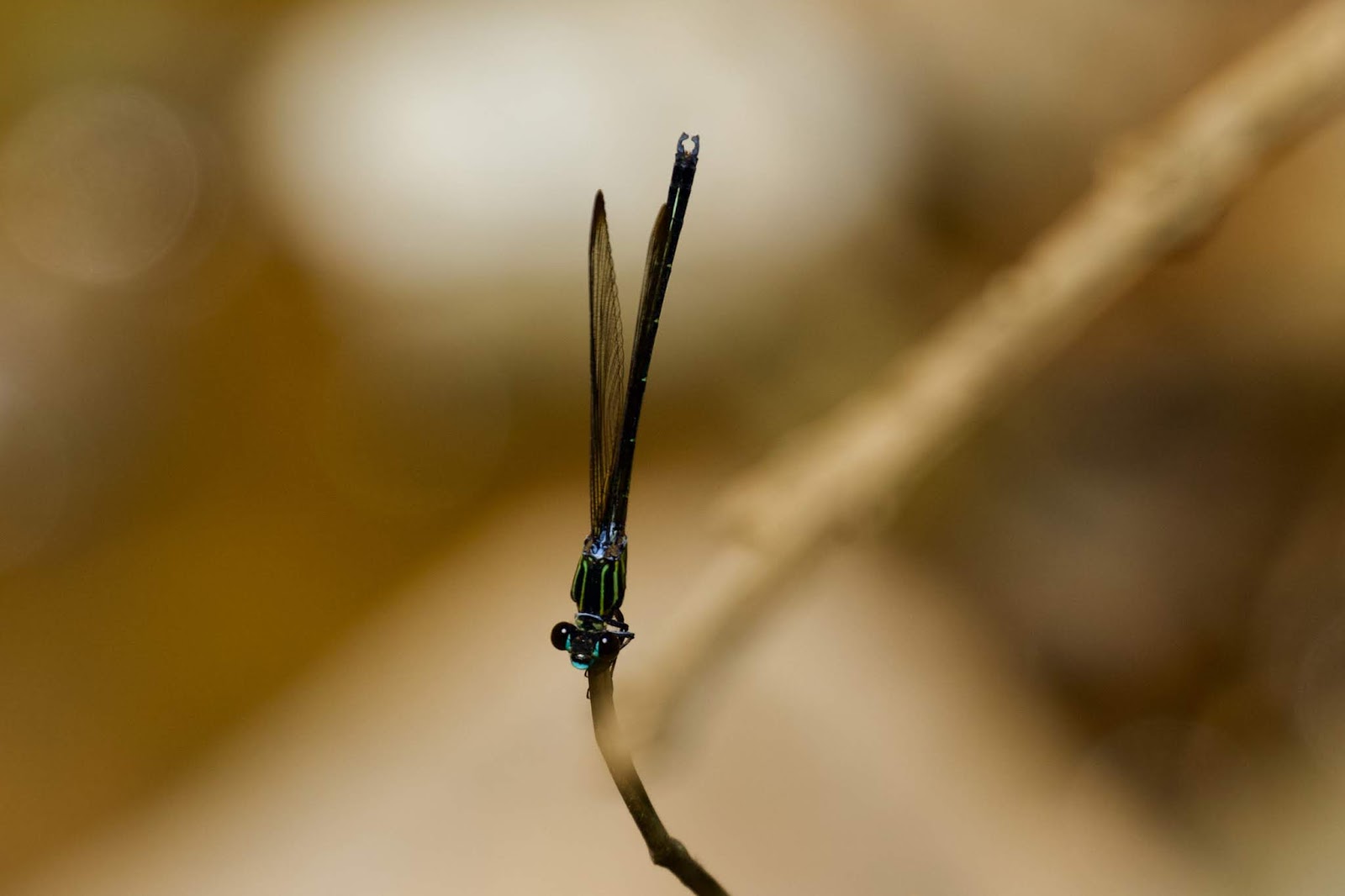
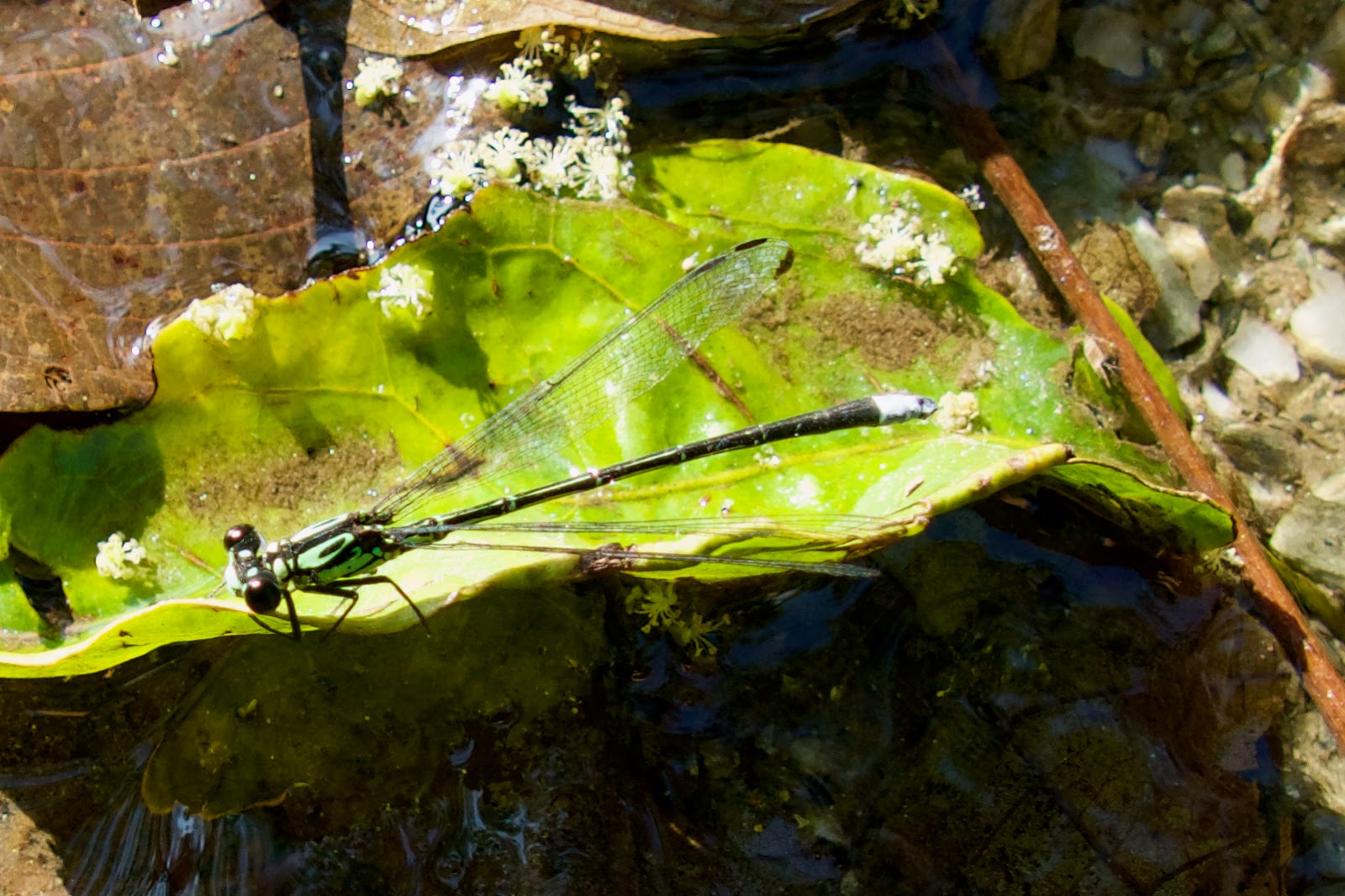
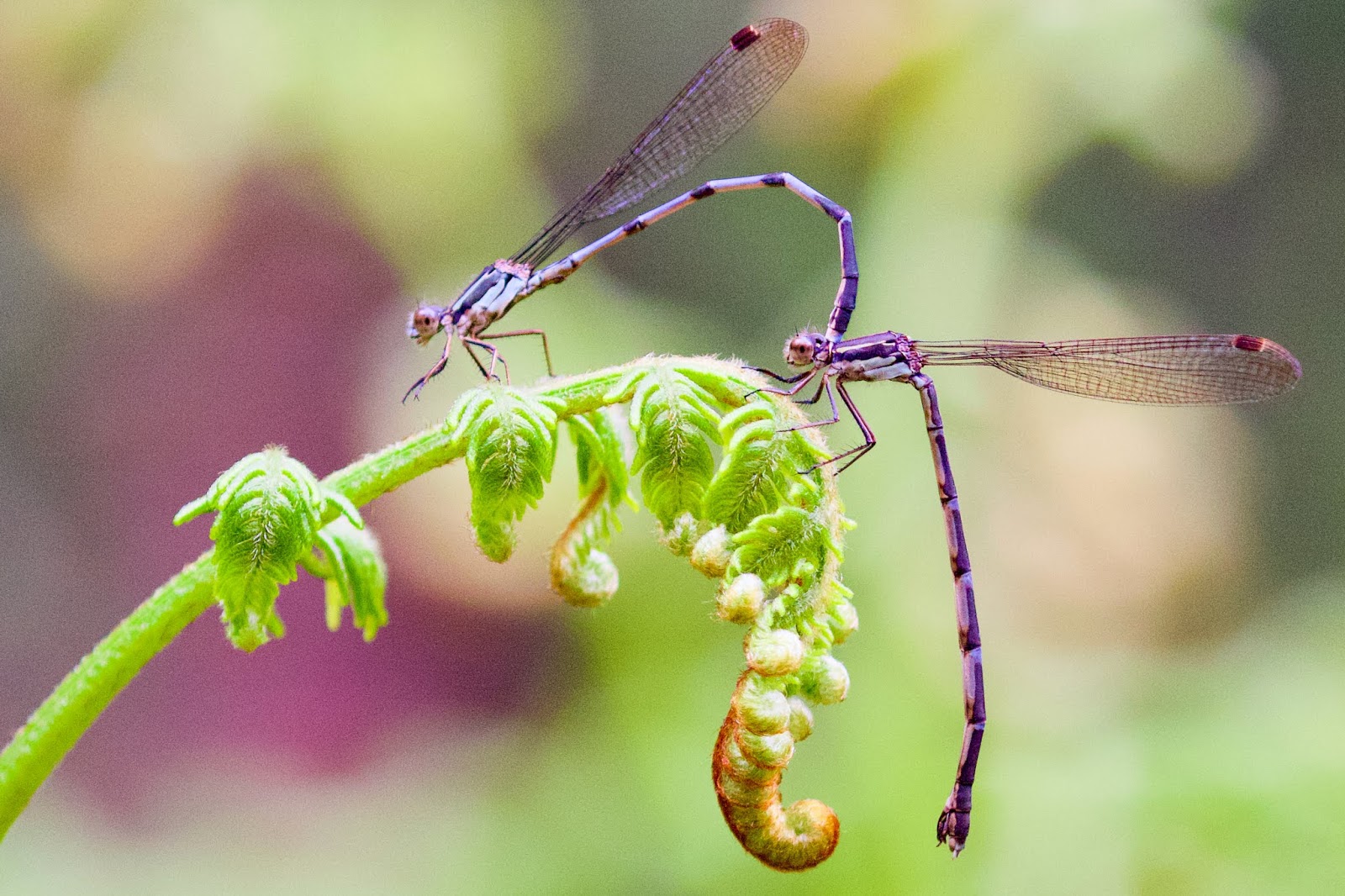
Bayadera indica 
(Selys 1853)
Elevation 700 to 1800m
Abdomen Length 38-40mm
Nepal Distribution: Kathmandu Valley, Pokhara, Lamjung
This damselfly is widespread across many areas in Nepal and in Northwest and Northeast India, and possibly Bhutan and Myanmar. The key ID for this species is the male with black tips on both fore and hind wings and turquoise blue markings on the face. They prefer fast-moving streams and will often rest on stones or debris in the middle of the stream. They are usually active during the monsoon - June to August.
Male
Female

Bayadera hyalina
Selys 1879
Elevation 1450m
Abdomen length 34mm

I was not sure if I should include this entry because of the discourse on B. longicauda (missing terminal segments) described by Asahina from Thailand and B. hyalina described from the Assam and Meghalaya regions. This species' information is given in detail on the IUCN website and is Red Listed as vulnerable. The description given by Fraser 1934 matches; i.e. hyaline wings, yellow on the lateral side of the 1st abdominal segment only, and the larger sharp ventral spine on the superior anal appendages. But I only found one teneral insect and since it is teneral the ID is in doubt.
Male
The superior anal appendages are rounded at the tips and touching, the inferiors are broader than those of B. indica shown below in two photos.

Bayadera longicauda
Fraser, 1928
Elevation 1500 t0 1800m
Abdomen length 38mm
Fraser lists this one as being very similar to B. hyalina but with a black labium. It is listed as being found in Nepal but I have not found it. The distribution given by Fraser is from Gangtok in Sikkim in May. A specimen is found in the Darjeeling museum.

Anisopleura group

Family Euphaeidae

Anisopleura comes
Hagen 1880
Elevation 500-2600m
Abdomen 36-40mm
Nepal Distribution: 
Godavari, Shiva Puri, Lamjung, Pokhara, Daman, Hetauda
There are three Anisopleura on the south-westerly route out of the Valley. A. lestoides is the most common of the Anisopleura, and A. comes is more common than A. subplatystyla. They share the same habitat but differ in seasonal timing. A. comes is usually earlier in the season than its close relative A. subplatystyla. The key identification feature of this species is the open elongated oval on the thorax. It is found all across North East India, and Nepal, and occurs in Punjab.
Male
Female

Anisopleura lestoides
Selys 1853
Elevation 700 -2500m
Abdomen 36-38mm
Nepal distribution: Kathmandu Valley, Pokhara, Ilam, Hetauda
This is a species that Fraser said was common in North East India and in Uttarakhand and it is common in Nepal. It is often found with A. subplatystyla sharing the same habitat and overlapping during part of the season. It is also most common in mid-elevations around 1200 to 1800m. I have seen it at many locations in Nepal and always on small streams. It can be seen from May to October. Males and females are similar having a spear-shaped mark on the thorax.
Male
Female

Anisopleura subplatystyla
Fraser 1927
Elevation 1500-2000m
Abdomen 34mm
Nepal Distribution: Godavari, Daman, Lamjung, Shiva Puri

Fraser said this species was seen mostly in Northeast India, Meghalaya, and Shillong. It is uncommon in Nepal and few records exist. I have found it in four locations so far. These photos of a male and female are from a small roadside stream off the Daman highway where a water mill is located. The distinguishing feature is the oval doughnut-shaped mark on the thorax dorsum.
Male
Female

Vestalis gracilis

Family Calopterygidae

Vestalis gracilis
(Rambur 1842)
Elevation ranges from 700 to 1400m
Abdomen length 45-56mm
Nepal distribution: Pokhara, Godavari, Lamjung

This is another, like Caliphaea confusa, that is either emerald green or a bronzed-golden color. It is usually found on forested streams, preferring slow-flowing small streams but also seen on larger streams with a faster flow. V. gracilis has hyaline wings with pale brown tinting and brown at the wing apex. The amount of green color is quite variable and depends on the age of the insect. Females are to males. They are distributed from the Western Ghats to Burma including Nepal, Bhutan, Bangladesh, and Northeast India.

Male
Female

Neurobasis chinensis

Family Calopterygidae

Neurobasis chinensis
(Linnaeus 1758)
Elevation ranges from 80 to 1900m
Abdomen length 45-50mm
Locations East to West Nepal
A rapid flash of emerald green from a leaf or stone mid-stream is eye-catching. This is a common species in Asia with many names, such as Stream Glory (India), Oriental Greenwing (Sri Lanka), Green-winged Demoiselle, Chinese Greenwing (China), and possibly other names apply, but all very descriptive of the beautiful green lining on the inner wing. Females usually rest on vegetation above males but with a white node and pterostigma on bronze-colored wings. They are found next to fast-flowing rivers and slow streams across Nepal from April through August.
Male
Female

Caliphaea confusa

Family Calopterygidae

Caliphaea confusa
Hagen in Selys, 1959
Elevation ranges from 800m to 2000m
Abdomen Length 36 to 40mm
Locations Godavari, Shiva Puri
Bronze-backed Demoiselles - Caliphaea confusa is found in dense pristine forests with small streams usually at higher elevations. It is found south of Kathmandu in the National Botanic Garden, in the ICIMOD wetland, and on the north side of the Kathmandu Valley. They are emerald green in color as juveniles then turn bronze as they age. They are among the first to appear in early April and disappear before monsoon late May to mid-June. They are weak fliers and often found resting on ferns near water seepages, breeding in slow jungle streams usually above 1000m.
Male

A mature female above and a male below show the striking bronze coloration.
Female


Saturday, April 11, 2020

Indolestes cyaneus

Family Lestidae

Indolestes cyaneus
(Selys, 1862)
Elevation 700 to 3300m
Abdomen 32-36mm
Locations Dhaap wetland, Godavari, Upper Mustang
Indolestes are called Reedlings because that is where they are found, sitting in reed beds next to lakes and ponds. Locations are from Jammu-Kashmir, Punjab, Darjeeling, Bhutan, and China. I. cyaneus is found at higher elevations in mountain wetlands over 2000m. They are hard to spot being very slender and slowly moving in tall grasses next to streams or ponds. They are pale blue in color. As juveniles, they are almost the same color as dry grass and very difficult to spot. They breed in early June and again in early October.
Male
Female

Lestes praemorsus & Lestes dorothea

Family Lestidae

Lestes praemorsus decipiens
Kirby, 1893
Elevation 700 to 1500m
Abdomen 32-35mm
Locations Godavari and Dipang Taal Pokhara
Usually, they are found clinging to the grass close to the edges of small lakes or along canals. At first glance, the dark sapphire blue eyes are easily spotted then the metallic blue thorax and a long slender abdomen. The paired ruffle of markings on the dorsum of the thorax and the pale yellowish tipped with black anal appendages are important for identification. They are seen before the monsoon from April to June. I saw them at a small lake near Pokhara called Dipang Taal in April 2019 and on a small fish pond in the Godavari area in August 2019.

Lestes dorothea
Fraser 1924
Elevation 500-1700
Abdomen length 36-40mm
Lestes dorothea is similar to L. praemorsus with differences in size, increased number of postnodal cells, shape, and color of anal appendages. The smaller female, overall lighter color, has small black pointed anal appendages.